

From Protection Comes Renewal
What all living creatures do to survive and thrive
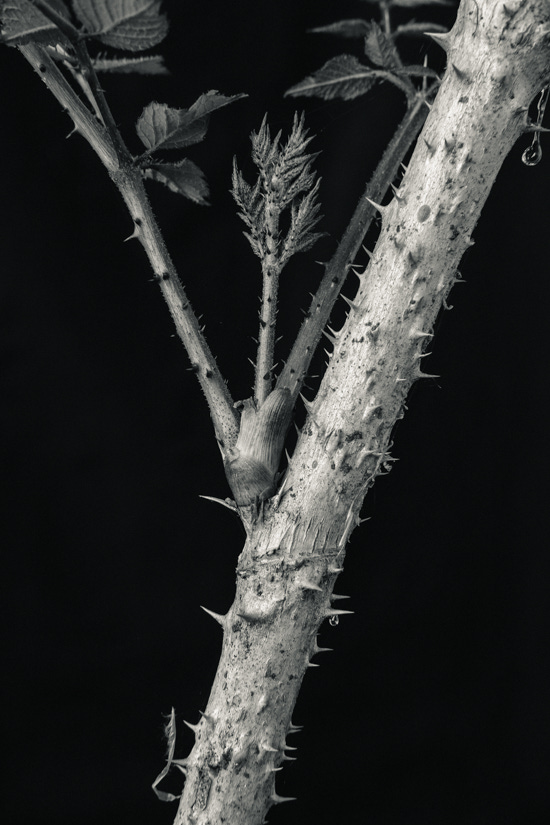
This plant portrait was made in May of 2020. In the U.S., we were still under a strict lockdown. I was walking daily in the woods, observing springtime the way I used to observe people. The trees and bushes were in the beginning stages of bloom, a favorite time of mine because I like the first blush of green as it washes across the world like a watercolor.
Despite years of hiking in the woods I hadn’t noticed this plant before, but in 2020 there were a lot of things we didn’t notice until we were made to. About to enter the trail, my eye was caught by a collection of straight strong branches shooting out of the ground, covered in fabulous thorns. The branches were encroaching onto the path; looking closer, I could see weathered stumps where other shoots had been cut back in the past to protect passers-by.
During my hike, I kept thinking about the plant, with its strong limbs and stay-away spikes. Would it matter if I took a clipping? Was that illegal? Even if it wasn’t, was that the wrong thing to do? After all, if everyone cut whatever they wanted, there would be no woods. Would someone catch me out, chew me out, as was all the rage? My brain churned on, fretting over the ramifications of clipping something that had already been clipped at a time when all our wings were clipped and nobody could agree on what appropriate behavior was, what we owed one another and ourselves.
I went home, looked up the plant, and discovered that it was plentiful; the local group that tended to the woods often cut it back to keep it in check. So I returned with clippers, took some cuttings (still feeling furtive I admit), and brought my quarry to my studio.
I hadn’t been to my studio in months. At that time we still didn’t know how Covid worked, how one could catch it, what was worth the risk and what wasn’t. I don’t remember why I finally decided it was OK to venture into my studio. But I did—in a mask and gloves, armed with hand sanitizer, barely daring to breathe in the hallways as I scurried to my space, even though no one else was there.
My branches were a hazard unto themselves. The thorns were hellaciously sharp, scattered in such a way that it was impossible to hold a shoot without getting stuck. Wrangling these beasts to stand straight in a jar involved a lot of swearing and bloody fingers. That plant was as determined to protect itself as I was to protect me.
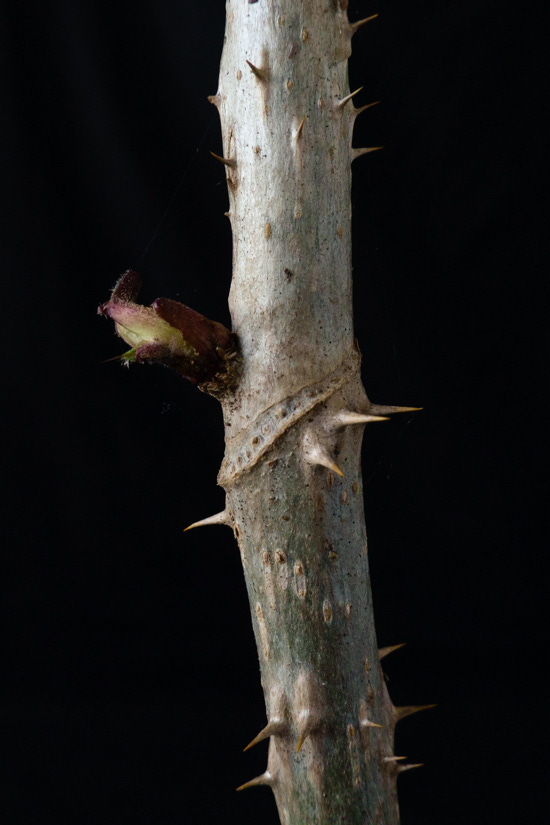
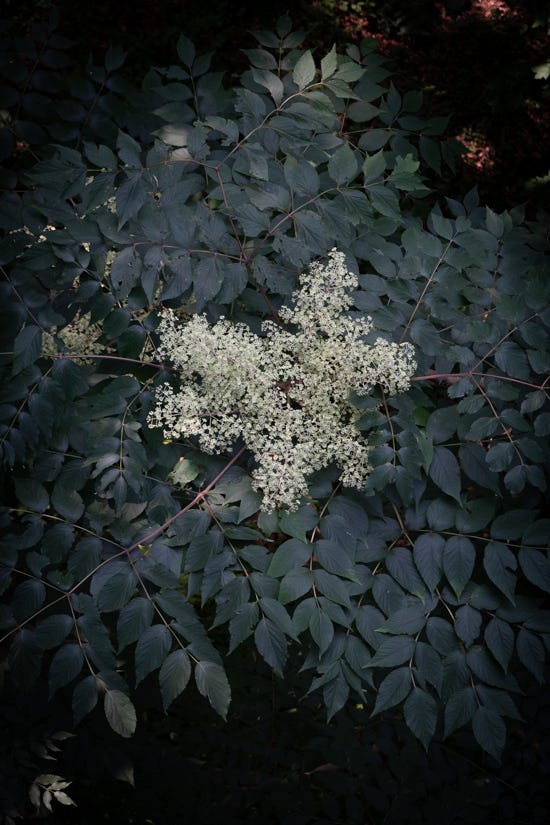
The plant is actually a shrub or tree, aptly called Devil’s Walking Stick. (It has a bunch of other colorful names, including Hercules Club, Shotbush, Prickly Elder, and Prickly Ash.) Now that I’ve learned what it is and have spent subsequent seasons observing it, I know that as it blooms and grows, upper shoots emerge smooth and harmless. Come summertime, it has lush, symmetrical foliage. In late summer pouffy white flowers bloom across its canopy, an offering to the sky that’s invisible from the ground. In autumn, the flowers give way to deep purple berries that are beloved by songbirds. The Iroquois wore the flowers in their hair and valued the fruit; during the Civil War, an extract of the plant was used to treat wounds. The extract may also be useful in treating antibiotic-resistant infections.
At the time I didn’t know this prickly plant was such a sweetie. I only knew that I wanted to be in my studio, safe from the world. I also needed something to do, something to focus on besides you-know-what. Studying my cuttings, finding a way to make an interesting portrait of them, was a way to stay safe, stay sane, use my brain.
It’s a funny thing, but often what you see through the viewfinder of a camera is not at all what you see in the resulting photo. Details you miss become prominent. Subtle aspects shine forth in unexpected ways. When you’re prowling around, camera in hand, you can become a bit of a myopic predator, hunting for the just the right angle or light. You may think you know what you’re going for, yet it’s only later—sometimes months or years—that you see what it was really all about, what story your subject was telling you all along.
Like its own hidden wounds, weeping a thick amber sap.
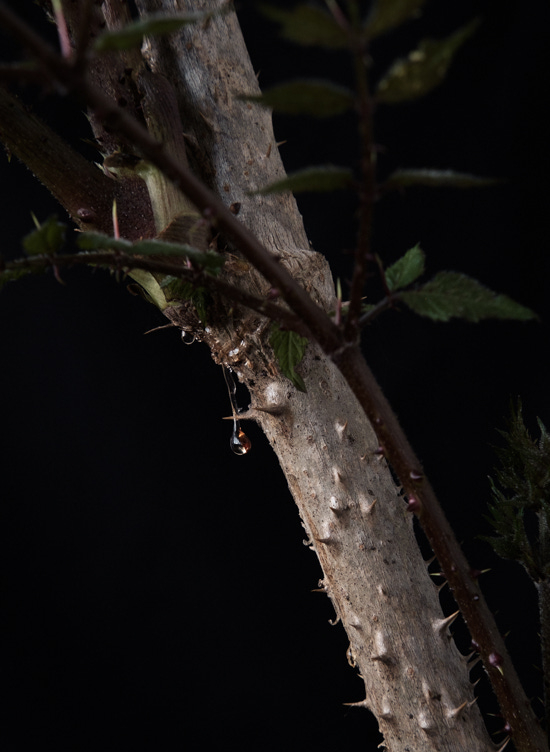
Like the frozen motion of its tender leaves, undersides covered in soft fine hairs, and the silvery sheen of its bark. The symmetry of its structure, each branch like a dinner party seated with paired partners and a single grand head of the table.
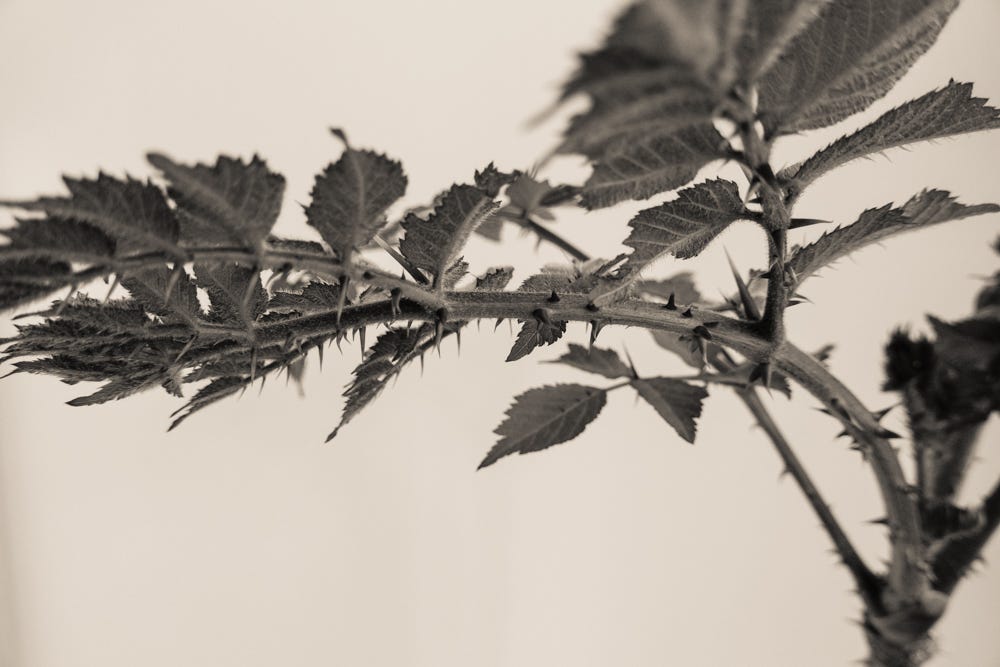
In those days, though, the plant’s bellicosity was what spoke to me. Those thorns protecting its newest, softest parts; its assertive lines, its defiant refusal to be touched. I chose a bold diagonal angle and made a big print in black and white, emphasizing strength over spring green. I was tuned into how the plant was protecting itself, just as we all were, so that it could grow and thrive. I named it “From Protection Comes Renewal” (the name just sprang into my head), and have since come to think about that theme a great deal.
About three years later a young man approached me at an open studio event and asked to buy the piece. It spoke to him, he said. He was about to make a big change in his life, born of the need to take care of himself and grow in new ways. Money was tight and he shyly asked for a small discount, which I was happy to give. He told me it would have a special place in his home where he could look at it and think. I hope his Devil’s Walking Stick has taken care of him, given him strength and renewal every day, just as it gave me in my studio when I needed it most.
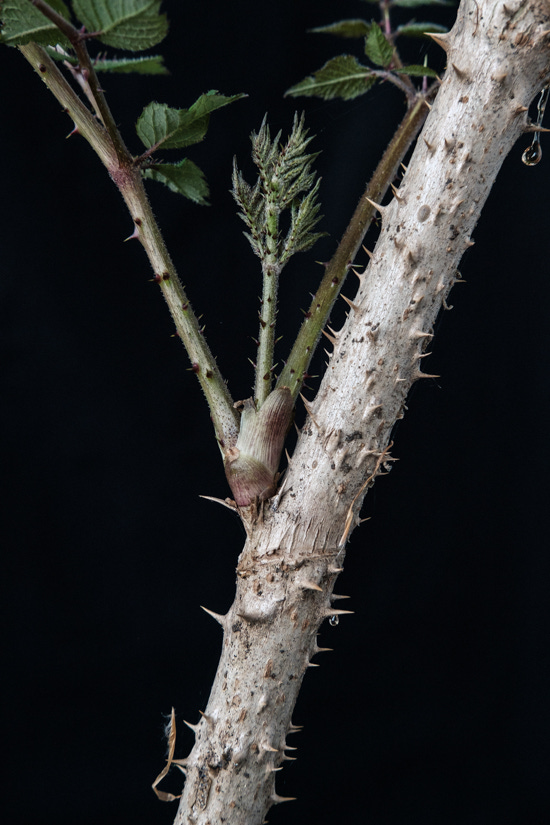
Yet when I revisited this photo session to write this post, I saw how I’d imported all the images in black and white and considered them only in that way. I suppose my world was much more black and white at that point. I still mostly work in monochromatic tones, but color has begun creeping into my work this year, and so it did as I chose which photos to feature here. I’m struck by how different this image feels in black and white versus color. I like black and white because I like its swagger, how it distills things to the matter at hand and abstracts recognizable shapes into something else. But five years after this image was born, it now feels like it’s better served in color—still sharp, but touched with optimistic green. We’ve both changed. That young man now owns a single edition, made possible at a singular point in time.